Tankless Water Heater Installation in Truckee, CA: Sized for Winter Demand
A tankless unit only works if it meets your home’s peak demand on the coldest day, not the brochure’s warm weather rating. Here is how to size one for a Truckee winter.
Tankless water heaters are the most searched water heater topic in Truckee after repair itself. Search Console shows “tankless water heaters truckee ca” and “tankless water heaters installation truckee ca” together drawing more than 200 impressions in three months, with zero clicks, because no dedicated page answers them. This post fills that gap.
The mistake most often made with tankless is sizing by the headline number on the box. That number assumes warm inlet water and one fixture at a time. A Truckee home in January faces neither condition. Size for peak demand at winter inlet temperature, and the unit delivers. Size for the brochure, and two showers at once turn lukewarm.
What On-Demand Means
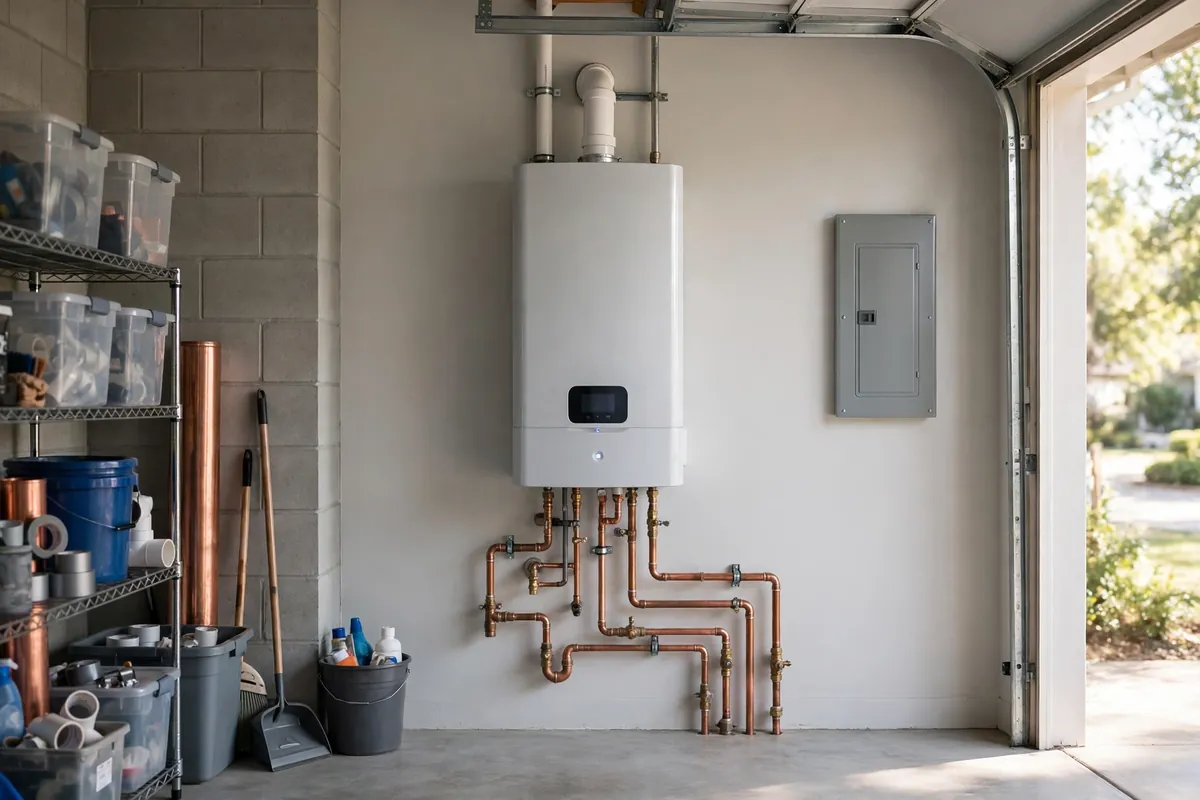
A tankless unit, also called an on-demand or demand-type unit, has no storage tank. It heats water only when a hot water tap opens, as water passes through a heat exchanger. There is no tank to run out, and no standby loss from keeping stored water hot all day. The trade is that the unit must heat the full flow on the spot, so its flow capacity, not a tank size, is the number that matters.
How to Size by Peak Demand
Do not add up every fixture in the home. Add up the fixtures likely to run at the same time during the busiest period. That sum is the peak demand, and the unit must meet it. Typical flow rates run as follows.
| Fixture | Typical hot water flow |
|---|---|
| Shower | 2.0 to 2.5 GPM |
| Bathtub faucet | 3.0 to 5.0 GPM |
| Bathroom sink | 0.5 to 1.5 GPM |
| Kitchen sink | 1.0 to 2.0 GPM |
| Dishwasher | 1.0 to 2.0 GPM |
| Washing machine | 1.5 to 3.0 GPM |
Three examples show how fast demand adds up.
- One shower plus one bathroom sink: about 3.0 to 4.0 GPM.
- Two showers plus a kitchen sink: about 5.5 to 7.0 GPM.
- Two showers plus a washing machine plus a kitchen sink: about 7.5 to 8.5 GPM.
GPM means gallons per minute. It is the continuous flow of hot water the unit can produce at a given temperature rise. A unit rated below your peak demand will still run, but it will deliver cooler water or reduced flow when the house is busy.
The Truckee Winter Catch: Temperature Rise
Flow rate alone does not size a unit. The second number is temperature rise: the difference between incoming cold water temperature and the desired hot water temperature, usually 120 degrees. The colder the inlet water, the larger the rise, and the lower the flow a unit can deliver.
Mountain towns see winter inlet water near 40 degrees. At a 120 degree target, that is an 80 degree rise. A unit rated 9 GPM in warm conditions may deliver only about 4.5 GPM at that rise. Truckee’s own winter inlet figure is not published, so the honest method sizes for the coldest expected inlet, not the summer one. As a cold climate rule, add 1 to 2 GPM to the warm weather rating when sizing for winter.
The practical test: ask what the unit delivers at an 80 degree rise, not what the box says. If that number covers your peak demand from the table above, the unit holds up in January. If it only covers the summer number, expect cold showers when two fixtures run.
Gas Versus Electric
Gas tankless units typically deliver 5 to 10 or more GPM, while electric units typically deliver 2 to 4 GPM. A household needing 6 or more GPM for whole-house use almost always needs gas. Electric suits point-of-use duty or a small home with modest demand, where its compact size and simpler install, with no venting, are real advantages.
A gas unit needs its venting path and gas line sized for the unit. An undersized gas line is a common cause of a tankless unit throttling flow on a cold day. The written estimate states what applies to your home before work begins.
Altitude: The Adjustment Nobody Mentions
Gas tankless units need altitude adjustment above 2,000 feet, because thinner air changes combustion. Without it, a unit installed at sea-level factory settings underperforms and can throw combustion error codes. Truckee sits near 6,000 feet, so altitude setup is part of a correct install here, not an extra. This is the same adjustment issue behind the Glenshire case on our site, where a tank unit installed 12 years earlier had never been adjusted for altitude at all.
Hard Water and Descaling
Truckee’s water carries elevated calcium and magnesium, and that hardness shortens water heater life. In a tankless unit, scale builds inside the narrow passages of the heat exchanger, restricting flow and causing the unit to overheat and shut down. In hard-water mountain towns, scale buildup is the most common tankless repair need.
The fix is routine: manufacturers recommend annual descaling in hard-water areas, and twice a year where water is very hard or the thermostat runs above 120 degrees. Descaling is a separate maintenance visit, quoted before the work. It is different from a standard tank flush, because it clears the exchanger itself and restores full output.
What Tankless Installation Costs in Truckee
Our own figures, from the water heater page:
| Option | Cost |
|---|---|
| Tank water heater | $900 to $1,400 |
| Tankless water heater | $1,800 to $3,500 |
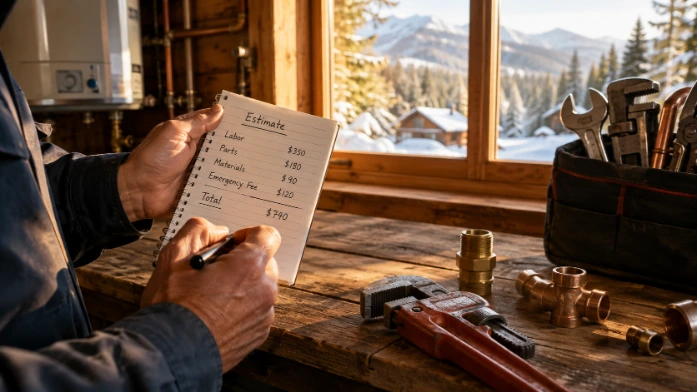
Same-day replacement is available for most Truckee and North Lake Tahoe homes, and we stock common tank sizes on our trucks. You get a written estimate before any work starts, so the final figure is agreed before the install, not discovered after it.
When a Tank Still Wins
Tankless is not the right answer for every home. A tank wins on upfront cost, on a simple like-for-like replacement where venting and gas lines already suit a tank, and in a small home whose peak demand never passes 3 to 4 GPM. The right choice is the one that meets your peak demand at winter inlet temperature within your budget, and that is what the estimate should show you.
Questions About Tankless in Truckee
How big a tankless unit does a Truckee home need?
Add up the fixtures likely to run at the same time during the busiest period. One shower plus one bathroom sink needs about 3.0 to 4.0 GPM. Two showers plus a kitchen sink needs about 5.5 to 7.0 GPM. Then check the unit’s rating at winter temperature rise, not the summer rating, because a unit rated 9 GPM in warm conditions may deliver only about 4.5 GPM at an 80 degree rise.
Does a tankless water heater work in a Truckee winter?
Yes, if it is sized for winter inlet temperature. An undersized unit delivers cooler water or reduced flow when two fixtures run at once. A unit sized for peak demand at an 80 degree rise holds up in January.
Should I choose gas or electric tankless in Truckee?
Gas for whole-house use. Gas units typically deliver 5 to 10 or more GPM, while electric units typically deliver 2 to 4 GPM. A household needing 6 or more GPM almost always needs gas. Electric suits a small home or point-of-use duty.
How often does a tankless unit need descaling in Truckee?
Once a year in hard-water areas, and twice a year where water is very hard or the thermostat runs above 120 degrees. Descaling clears the heat exchanger and restores full output. It is a separate maintenance visit, quoted before the work.
What does tankless water heater installation cost in Truckee?
Tankless installation runs $1,800 to $3,500, against $900 to $1,400 for a tank unit. Same-day replacement is available for most Truckee and North Lake Tahoe homes. You get a written estimate before any work starts.
Related Pages
Need Hot Water That Keeps Up?
Available 24/7. A live technician answers every call.
📞 Call (530) 844-9197CA Licensed and Insured. CSLB License #779502.
We stand behind our work. If something isn’t right, we’ll come back and make it right.