How to Prevent Frozen Pipes in Your Truckee Home This Winter
Prevent frozen pipes in Truckee before winter temperatures put your home or cabin at risk. Temperatures here can plunge below zero, leaving pipes in crawl spaces, exterior walls, garages, and other exposed areas vulnerable to freezing and bursting.
The good news: frozen pipes are almost entirely preventable. Here’s exactly what you need to do before and during Truckee winters to keep your plumbing intact.
Why Truckee Pipes Freeze More Than Average
Truckee sits at 5,817 feet elevation. The average low in January is 18°F — and it regularly drops into single digits and below zero. That’s cold enough to freeze exposed pipes quickly, especially with windchill factored in.
Add to that the fact that many Truckee properties are vacation homes that sit empty for days or weeks during the coldest months. An unoccupied home with the heat turned down is the perfect setup for a frozen pipe disaster.
7 Ways to Prevent Frozen Pipes in Truckee
1. Keep Your Heat On — Even When You’re Not There
Never let your Truckee home drop below 55°F, even when you’re away. This is the single most important rule. A few extra dollars on the heating bill is nothing compared to a burst pipe repair.
2. Insulate Pipes in Crawl Spaces and Exterior Walls
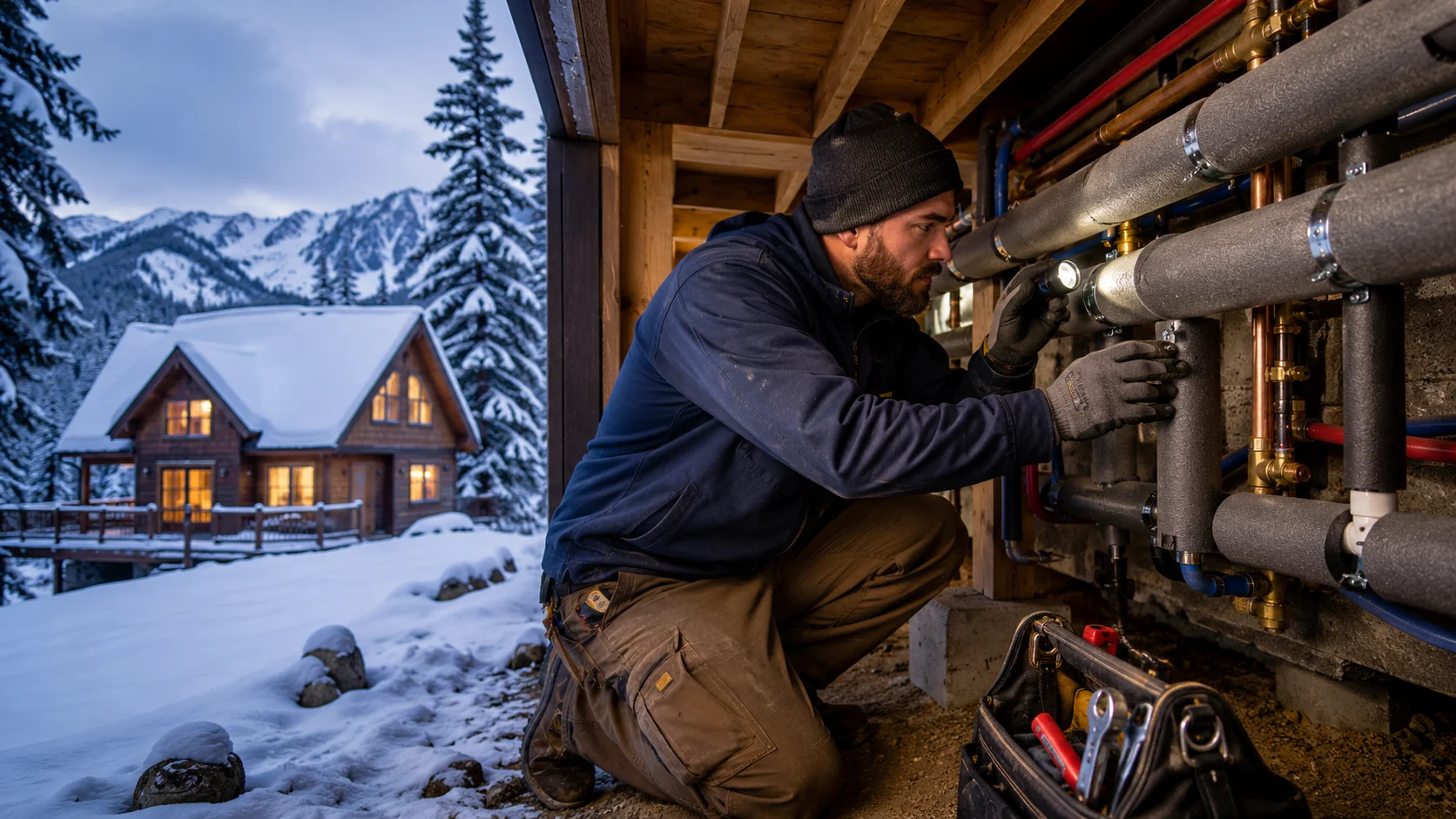
Foam pipe insulation sleeves cost a few dollars per foot and can be installed in minutes. Any pipe in an unheated space — crawl space, garage, attic, or exterior wall — is at risk and should be insulated.
3. Open Cabinet Doors Under Sinks on Exterior Walls
Kitchen and bathroom sink pipes on exterior walls are especially vulnerable. Opening cabinet doors lets warm interior air circulate around the pipes. It’s a simple trick that makes a real difference during cold snaps.
4. Seal Air Leaks Near Pipes
Cold air infiltration is a major cause of pipe freezing. Seal any gaps, cracks, or holes in walls, foundations, and crawl space vents near pipe runs. Expanding foam sealant works great for this.
5. Disconnect and Drain Outdoor Hose Bibs
Outdoor spigots are one of the first things to freeze. Disconnect garden hoses, shut off the interior valve that feeds outdoor bibs, and open the exterior spigot to let any remaining water drain out.
6. Let Faucets Drip During Extreme Cold
When temperatures drop below 10°F, let a thin trickle of water run from faucets on exterior walls. Moving water is much harder to freeze than standing water. It uses very little water and can prevent thousands in damage.
7. Get a Professional Winterization If You’re Leaving for the Season
If you’re closing up your Truckee cabin for more than a few weeks, consider a full professional winterization (drain-down). A plumber will drain all pipes, the water heater, and add antifreeze to traps — leaving nothing in the system that can freeze.
Below 32°F — Monitor exterior pipes
Below 20°F — Run trickle from interior faucets on exterior walls
Below 10°F — High alert; check on vacant properties
Below 0°F — Pipes in unheated spaces can freeze within hours
What to Do If a Pipe Does Freeze
- Don’t use an open flame. Never use a blowtorch or open flame to thaw pipes — this causes house fires.
- Turn off the water main. If you think a pipe may have burst, shut off water at the main before thawing.
- Apply gentle heat. Use a hairdryer, electric heat tape, or heating pad on the affected pipe. Start nearest the faucet end.
- Call a plumber if it’s burst. A burst pipe needs professional repair — don’t try to patch pressurized copper or PEX yourself. See our frozen pipe repair page for what to expect, or call us directly.
Signs Your Pipe May Already Be Frozen
- No water (or reduced flow) coming from a faucet
- Visible frost on exposed pipes
- Unusual gurgling or banging sounds in walls
- Damp spots, bulging drywall, or water stains appearing suddenly
Frozen Pipe Emergency in Truckee?
We respond within 60 minutes, 24/7. Don’t wait — frozen pipes that burst can cause catastrophic water damage.
📞 Call (530) 844-9197 Now